"Will my insurance cover this?" It's the first question homeowners ask after a tree falls on their property. The short answer: yes, most homeowner's insurance policies cover tree removal when the tree damages an insured structure. But the details matter — and knowing them before you need them saves stress, money, and time.
Here's what I've learned working with homeowners and their insurance companies across the Grand Rapids area as an ISA Certified Arborist (MI-4776A).
What Homeowner's Insurance Typically Covers
Tree Falls on Your House, Garage, or Fence
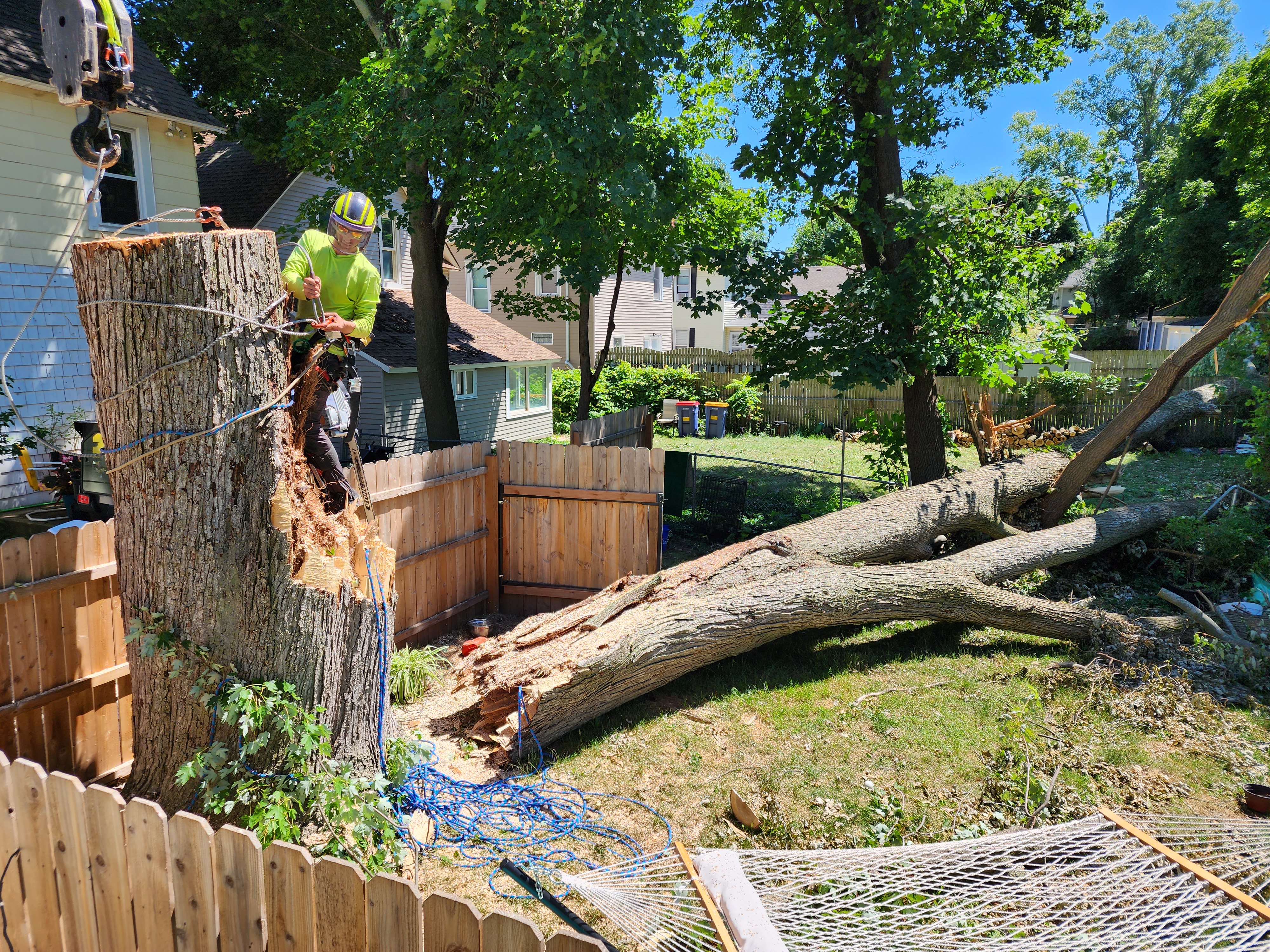
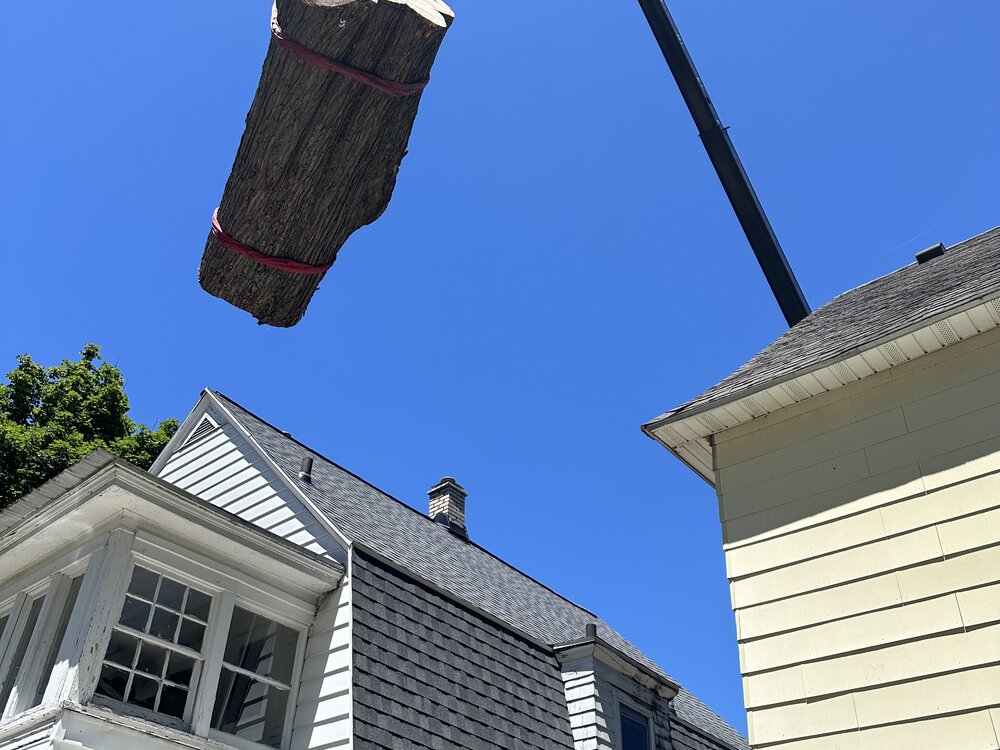
Covered. If a tree (yours or your neighbor's) falls on an insured structure — your house, detached garage, shed, fence, or driveway — the removal cost and structural repair are typically covered under your policy. This includes the full cost of emergency removal, crane work, debris hauling, and stump grinding.
Tree Falls on Your Car
Covered under comprehensive auto insurance, not your homeowner's policy. If a tree falls on your vehicle, file a claim through your auto insurer. Comprehensive coverage handles this — collision coverage does not.
Storm Damage Cleanup
Usually covered if the storm also damaged a structure. Most policies include a debris removal provision (typically $500–$1,000) for clearing fallen trees and branches after covered storm damage. Some policies extend this even if the tree didn't hit a structure, but it varies.
What Homeowner's Insurance Typically Does NOT Cover
Tree Falls in the Yard — No Structure Damage
Usually not covered. If a tree falls across your lawn but doesn't hit anything insured, you're generally responsible for the removal cost. Some policies offer limited coverage ($500–$1,000) for fallen trees blocking a driveway or wheelchair ramp, but don't count on it.
Preventive Removal of a Hazardous Tree
Not covered. If an arborist tells you a tree is dying and should be removed before it falls, that's considered maintenance — and maintenance is your responsibility. However, removing a hazard tree proactively is almost always cheaper than dealing with emergency removal and structural repair after it falls.
Neglected Trees
May not be covered. If your insurer determines the tree was dead or visibly diseased and you failed to address it, they may deny the claim. This is another reason to get a professional arborist assessment when you notice signs of decline — it creates a paper trail showing you acted responsibly.
How to File a Tree Damage Insurance Claim
- Document everything. Take photos and video of the tree, the damage, and the surrounding area before anything is moved or cut.
- Call your insurance company. Report the claim and ask about your policy's tree removal coverage limits.
- Get a written estimate from a certified arborist. Your insurer will want a detailed estimate with line items. We provide these routinely at B's Trees.
- Don't wait for adjuster approval to make emergency repairs. If the roof is open, tarp it. If the tree is still threatening the structure, have it removed. Your policy typically covers reasonable emergency action to prevent further damage.
- Keep all receipts. Emergency tarping, tree removal, temporary repairs — save every receipt for reimbursement.
The Neighbor's Tree Fell on My Property — Who Pays?
Your insurance covers damage from a neighbor's tree falling on your property. This surprises most people, but it's standard. Your homeowner's policy covers damage to your structures regardless of where the tree originated. You file the claim with your insurer, not your neighbor's.
The exception: if your neighbor knew the tree was dead or hazardous and did nothing, you may have a negligence claim. But this is a civil matter, not an insurance issue — and it's hard to prove.
How Much Does Emergency Tree Removal Cost?
For context, here are typical emergency removal costs in the Grand Rapids area:
- Small tree on fence: $500–$1,500
- Medium tree on garage/shed: $1,500–$3,500
- Large tree on house (crane required): $3,000–$8,000+
- Stump grinding (add-on): $100–$400 per stump
These costs are typically covered in full above your deductible when a structure is damaged.
Pro Tip: Preventive Care Saves Money
The cheapest tree removal is the one you never need. Regular arborist inspections every 2–3 years can identify trees in decline before they become emergencies. A $300 pruning job today can prevent a $5,000 emergency removal and $20,000 in structural repairs tomorrow.
Have a tree you're worried about? Call B's Trees at 616-947-4050 for a free assessment. We serve Grand Rapids, Kentwood, Wyoming, Ada, Rockford, Walker, and all of Kent and Barry County.